
HVAC
Our industry-leading HVAC services for homes include expert installation of high-efficiency air conditioners and furnaces, regular maintenance for optimal performance, 24/7 emergency repairs, and energy-saving upgrades like smart thermostats and air purifiers for enhanced comfort and air quality.


Save on Energy Bills
Our HVAC systems use cutting-edge technology, such as smart thermostats and variable-speed motors, to cut energy use and reduce utility costs by up to 20-30%.

Enjoy Consistent Comfort
Experience even temperatures and better humidity control throughout your home, eliminating hot or cold spots.

Breathe Cleaner Air
Our advanced filtration systems, including HEPA or UV options, remove dust, allergens, and pollutants for healthier indoor air.

Boost Home Value
A new HVAC system increases your property’s value and attracts potential buyers.

Eco-Friendly Living
Energy-efficient units with green refrigerants lower your carbon footprint, supporting a sustainable future.

Whisper-Quiet Performance
Enjoy a quieter home with systems designed for near-silent operation.
Get Your Free HVAC Estimate
Split Systems
Efficient heating and cooling with separate indoor and outdoor units. Ideal for homes with ductwork, delivering consistent comfort year-round.

Ductless Mini-Splits
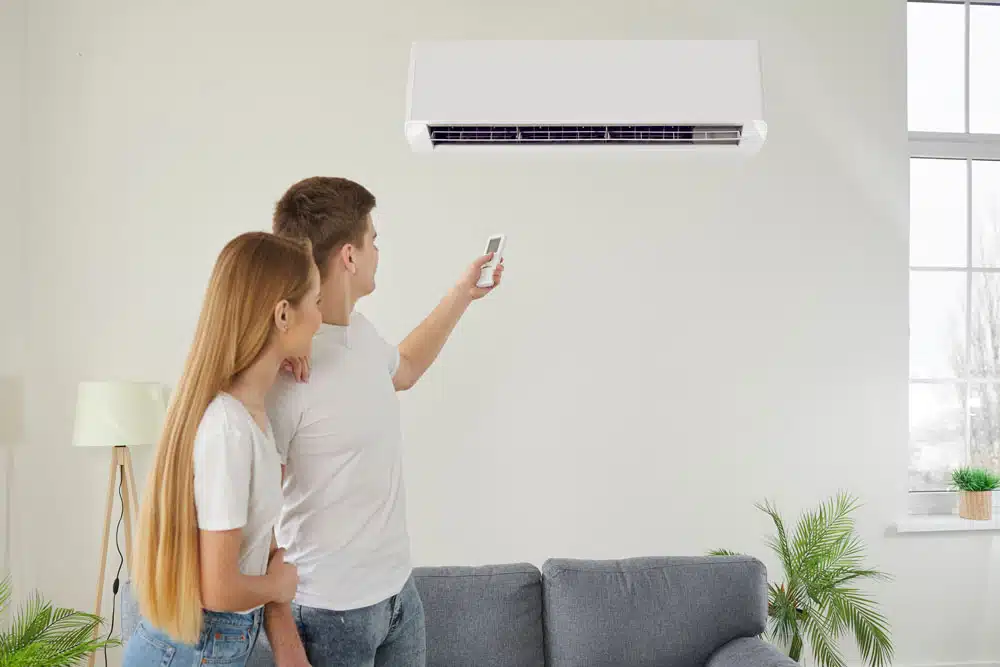
Compact, duct-free units for targeted heating and cooling. Perfect for small homes or spaces without ducts, offering flexible, energy-saving solutions.

Heat Pumps
Eco-friendly systems for both heating and cooling. Best for mild climates or green living, providing efficient, all-season comfort.
What New England Homeowners Should Know About HVAC
HVAC stands for Heating, Ventilation, and Air Conditioning — the interconnected systems that control temperature, humidity, and air quality in your home. In New England, the right HVAC choice depends on three things: how cold your winters get, whether you have existing ductwork, and whether you're trying to capture state rebates like Mass Save. Modern cold-climate heat pumps now perform efficiently down to below-zero temperatures and qualify for substantial rebates across MA, CT, RI, NH, and ME.
- Split SystemsThe most common setup. An outdoor condenser paired with an indoor air handler, using existing ductwork to deliver heating and cooling throughout your home.
- Ductless Mini-SplitsNo ductwork required. Wall- or ceiling-mounted units provide zone-by-zone temperature control, perfect for additions, older homes, or unconditioned spaces.
- Cold-Climate Heat PumpsSingle system for both heating and cooling. Works efficiently in New England winters and qualifies for state rebates plus the federal 25C tax credit.
- Smart ThermostatsWi-Fi-enabled thermostats learn your schedule and can cut HVAC energy use by 10-15% with no comfort tradeoff.
- Air Quality Add-OnsHEPA filtration, UV systems, and humidity control remove allergens and improve indoor air during sealed-up New England winters.
- Annual MaintenanceYearly tune-ups extend system life, maintain efficiency, and prevent the breakdowns that always seem to happen on the coldest night of the year.
HVAC FAQ
HVAC stands for Heating, Ventilation, and Air Conditioning. It refers to the mechanical systems that work together to control indoor temperature, manage humidity, and maintain air quality in your home. A complete HVAC system includes equipment for heating (furnace, boiler, or heat pump), cooling (air conditioner or heat pump in cooling mode), and ventilation (ductwork, vents, and air handlers).
An HVAC system handles heating, ventilation, and air conditioning together — the complete climate-control package for your home. An AC unit only handles cooling. The terms get used interchangeably, but technically every AC is part of an HVAC system, while not every HVAC system uses a traditional AC unit (a heat pump, for example, handles both heating and cooling in one device).
The three most common residential HVAC types are split systems, ductless mini-splits, and heat pumps. Split systems pair an outdoor condenser with an indoor air handler and use ductwork to distribute air — the standard setup in most New England homes. Ductless mini-splits skip the ductwork entirely and provide zone control. Heat pumps use one system for both heating and cooling, and modern cold-climate heat pumps work efficiently even in below-zero New England winters.
Yes — modern cold-climate heat pumps are designed specifically for New England conditions. The latest models maintain full heating capacity down to roughly 5°F and continue to provide useful heat at sub-zero temperatures. Massachusetts, Connecticut, Rhode Island, Maine, and New Hampshire all offer substantial rebates for cold-climate heat pump installation, and they pair with the federal 25C tax credit. The older reputation that "heat pumps don't work up here" is based on systems from 10-20 years ago — the technology has changed dramatically.
Yes, we specialize in installing energy-efficient HVAC systems that reduce energy consumption and lower utility bills. Options include high-SEER2 air conditioners, high-AFUE furnaces, cold-climate heat pumps, ductless mini-splits, smart thermostats, and HEPA or UV air filtration. We size every system to your specific home rather than defaulting to a one-size-fits-all unit, which is the biggest single factor in real-world efficiency.
Signs your HVAC system may need replacement include frequent breakdowns, rising energy bills despite no change in usage, uneven heating or cooling between rooms, unusual noises, short cycling (turning on and off rapidly), and systems older than 10-15 years. If you've spent more than half the cost of a new system on repairs in the last two years, replacement is almost always the better investment. A professional evaluation can confirm whether repair or replacement makes more sense.
HVAC systems should be serviced at least once a year — ideally twice for systems that handle both heating and cooling, with a cooling tune-up in spring and a heating tune-up in fall. Regular maintenance includes cleaning or replacing filters (filters themselves should be changed every 1-3 months), checking refrigerant levels, inspecting electrical connections, lubricating moving parts, and cleaning coils. Annual tune-ups typically pay for themselves in efficiency gains and catch small problems before they become expensive failures.
Yes, and they're substantial. The federal Energy Efficient Home Improvement Credit (25C) covers 30% of the cost of qualifying heat pumps, central AC, and furnaces, up to $2,000 for heat pumps and $600 for AC or furnaces per year. State programs add even more: Mass Save offers heat pump rebates of up to $10,000 in Massachusetts, Connecticut has the Energize CT program, and Rhode Island, Maine, and New Hampshire all run similar incentive programs. We handle the rebate paperwork as part of every install.
Let’s See What We Can Do For Your Home
Fill out the form and we’ll reach out with a free custom design, savings report, or quote—tailored to your needs.
Empowering Homeowners With Peace of Mind Contact
Our trusted local professionals handle all the details so you don’t have to.