
Tree Services
Specializing in tree removal for solar production optimization, our expert team of engineers run a state-of-the-art shade study for your home to determine which trees will have the highest impact on the performance, and handle end-to-end professional removal and cleanup.

Increased Energy Production
Reducing shade through tree work directly increases the amount of sunlight reaching solar panels, thereby boosting energy output.

Solar System Efficiency
Shading, even partial, can drastically reduce solar panel efficiency due to the interconnected nature of panel systems, where one shaded panel can affect the entire array. Tree work mitigates this by ensuring unobstructed sunlight.

Cost Savings
Improving the sun exposure solar panels receive can lead to significant increased savings as fewer panels will be needed to offset the electricity usage.

Prevention of Physical Damage
Trees near solar panels pose risks of physical damage from falling branches or sap, which can impair panel functionality. Tree work, particularly pruning, mitigates these risks, ensuring panels remain intact and operational.

Increased Production-Based Incentives
With more production from more sunlight hitting the panels comes increased production-based incentives, which are available in many US states, paying homeowners directly based on how much energy they produce.

Net Environmental Benefit
Solar panels have a small carbon footprint compared to the emissions they offset, even accounting for tree removal necessary to install.
Get Your Free Tree Removal Estimate

Shade Study
With state-of-the-art software combined with an on-site analysis, we will identify which trees will have the highest impact on your custom solar system’s production.
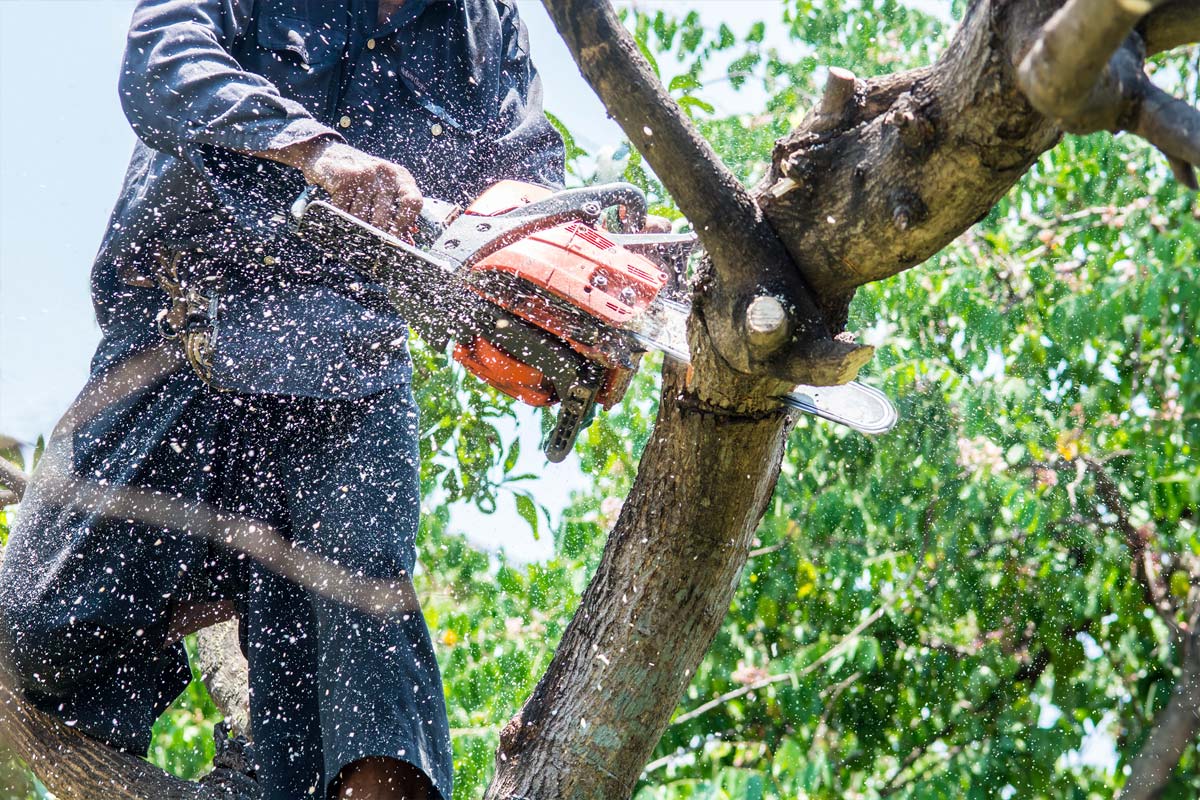
Removal
Our team of expert tree professionals will remove the trees safely and efficiently.

Cleanup
Our crews will clean up debris and remove the wood, or leave for your use upon request.
Strategic Tree Work for Maximum Solar Production
Specializing in tree removal for solar production involves strategic vegetation management to ensure solar panels receive maximum sunlight without obstruction. Shading from trees can reduce solar panel output by 30-40%, making professional removal or trimming essential for long-term energy savings. Our approach combines state-of-the-art shade analysis software with on-site assessment to identify exactly which trees and limbs have the highest impact on production — so you remove what matters and keep what doesn't.
- Shade AnalysisState-of-the-art software identifies exactly which trees or limbs have the highest impact on your solar production — no guesswork.
- Strategic Removal (80/20 Rule)Focus on the few trees that cause the most shade. Removing just 20% of the right trees often delivers 80% of the sun exposure increase.
- Directional FocusTrees south of a roof are highest priority because they block direct midday sun. East and west trees affect morning and afternoon production.
- Safety & Damage PreventionFalling branches and sap can damage solar panels. Strategic trimming protects your system as much as it boosts output.
- Higher Financial ROIRemoving the right trees can mean fewer panels needed to offset your usage, plus higher production-based incentive payments.
- Net Carbon GainA typical residential solar system offsets significantly more CO2 over its lifetime than the trees removed to make space for it.
Tree Services FAQ
Shade can reduce solar panel output by 30-40%, and the impact is often worse than people expect. Because solar panels are wired together in strings, shade hitting even a single panel can drag down production across the entire string — like one weak link affecting the whole chain. Modern systems with microinverters or power optimizers reduce this problem, but no system performs at its best in shade. The biggest production gains often come from removing or trimming just a few key trees rather than aggressive whole-yard clearing.
A shade study uses specialized software combined with on-site analysis to map exactly how sunlight hits your roof throughout the day, throughout the year. It identifies which trees or limbs cast shade on your potential solar panels and quantifies how much production each one costs you. The output is a precise list of removal or trimming targets ranked by impact — so you don't pay to remove trees that don't matter, and you don't leave production on the table by missing the ones that do. This is the most important step in any solar-paired tree project.
Trees south of your roof are the highest priority because they block direct sunlight during peak production hours (roughly 10 AM to 2 PM). Trees to the east affect morning production, and trees to the west affect afternoon production — both important but lower priority than south-facing trees. Tall trees within roughly 20-30 feet of the roof edge typically have the biggest impact. The 80/20 rule applies here: identifying and removing the right 20% of trees often delivers 80% of the production improvement.
Often yes. Strategic trimming or crown raising can preserve the tree while eliminating the limbs that cast shade on your roof — a common solution for mature trees you'd rather not lose. The tradeoff is that trees keep growing, so trimming may need to be repeated every few years to maintain solar production. Full removal is the right call when a tree's growth pattern will continue to interfere, when it's already in poor health, or when it poses a falling-limb risk to the panels themselves. Our shade study identifies which approach makes sense per tree.
Yes, our tree services include the safe removal of hazardous trees that pose risks to your home, property, or safety. We use professional equipment, rigging, and technique to bring trees down in tight spaces without damaging structures, landscaping, or adjacent trees. This includes storm-damaged trees, dead or dying trees, and trees with structural defects that make them likely to fail in the next nor'easter.
Absolutely. Our crews follow strict safety protocols to protect your home, landscaping, solar panels, and surrounding structures during tree trimming, removal, or stump grinding. We use precision rigging on tight removals near buildings or panel arrays, and we carry full liability and workers' comp insurance — never hire an uninsured tree contractor, the liability falls back on the homeowner if something goes wrong.
Yes — full cleanup is included in every project. Our crews remove all debris and haul away the wood as part of the service. If you'd like to keep the wood for firewood or other uses, just let us know and we'll cut it to length and stack it for you instead. We also offer stump grinding as an add-on so you don't have to look at a stump for years after the tree comes down.
Signs that your trees may need professional attention include dead or damaged branches, leaning trunks, visible cavities or fungal growth, overgrowth near power lines or your roof, and any tree casting significant shade on existing or planned solar panels. After major storms — which New England gets multiple times a year — it's worth having any large tree within falling distance of your home inspected. A professional assessment costs nothing if you're getting an estimate and can save thousands in property damage prevention.
Let’s See What We Can Do For Your Home
Fill out the form and we’ll reach out with a free custom design, savings report, or quote—tailored to your needs.

Empowering Homeowners With Peace of Mind Contact
Our trusted local professionals handle all the details so you don’t have to.